


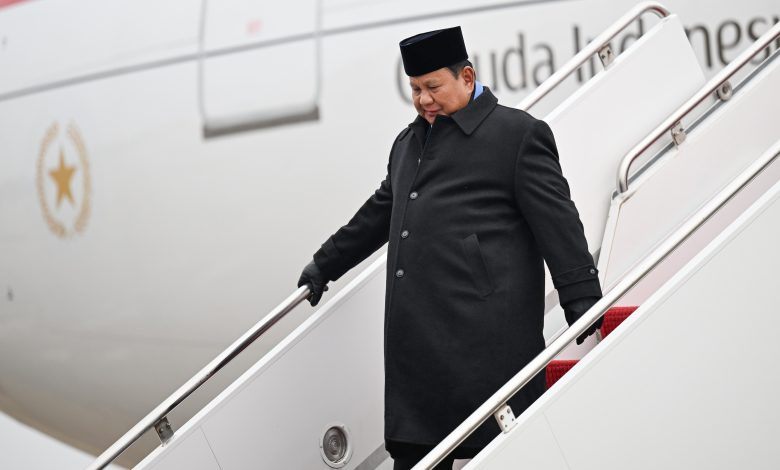
Bandung, 18 February 2026 — President of the Republic of Indonesia, Prabowo Subianto, is scheduled to arrive in the United States to attend the inaugural meeting of the Board of Peace (BoP), alongside the signing of a reciprocal tariff agreement with the United States. The occasion is seen as a significant moment in defining Indonesia’s position and role amid evolving global diplomatic dynamics.
Commenting on the development, International Relations lecturer at Universitas Katolik Parahyangan (HI UNPAR), Drs. Yulius Purwadi Hermawan, M.A., Ph.D., was interviewed by Kompas to provide analysis on Indonesia’s participation in the BoP. Yulius emphasized that the meeting is crucial for President Prabowo to affirm Indonesia’s readiness to play a constructive role in ensuring that the BoP upholds a clear mandate for Palestinian independence and is not driven by other interests.
According to Yulius, the BoP should operate within the framework of the United Nations (UN) mandate, referring to UN Security Council Resolution 2803, including the establishment of an International Stabilization Force (ISF). He stressed the importance of Indonesia ensuring that the BoP remains aligned with the UN mandate and committed to a two-state solution, rather than a one-state solution.
Strategically, Yulius suggested that Indonesia engage and coordinate with like-minded countries such as Türkiye, Jordan, and Saudi Arabia. In his view, Indonesia cannot act individually in addressing such a complex issue. He also noted that President Prabowo could leverage personal diplomatic engagement with U.S. President Donald Trump, who serves as chair and member of the BoP.
Furthermore, Yulius underscored the importance of Indonesia carefully listening to and assessing the United States’ plans within the BoP framework before making further commitments. He pointed to Saudi Arabia’s cautious approach in withholding full commitment until clearer details regarding the concept and timeline of the BoP are presented. Transparency regarding the BoP’s framework and objectives, he argued, is essential before Indonesia adopts an official stance, although he acknowledged the challenges in pushing for such transparency.
Yulius also observed that the BoP and the United Nations currently appear to be operating on separate tracks. Nevertheless, Indonesia could encourage UN Security Council member states to proactively express their views to ensure that the BoP aligns with the UN mandate. Without such alignment, he warned, the BoP risks being perceived as serving particular interests under the banner of Palestinian independence.
The interview video can be accessed through the following link.