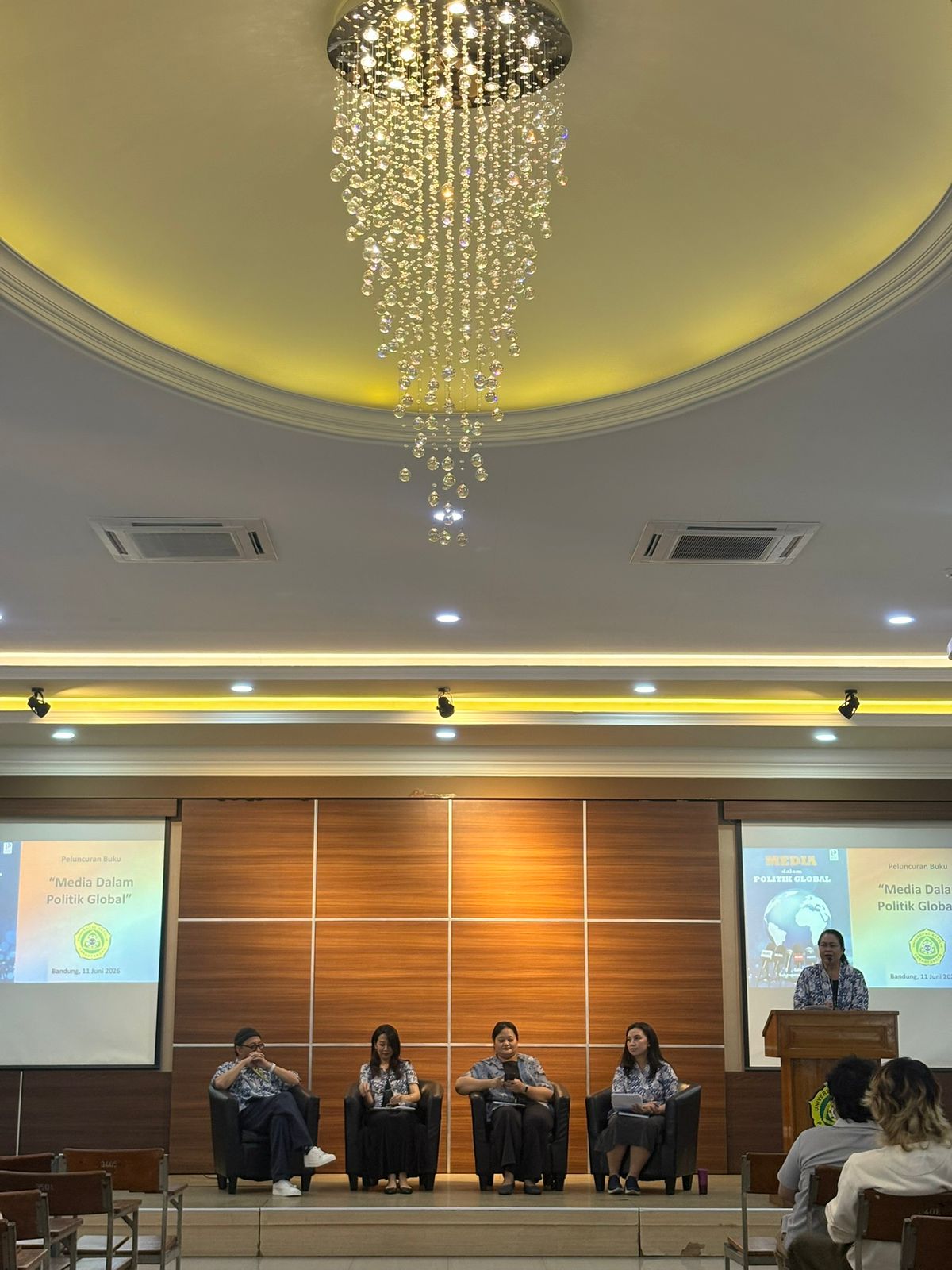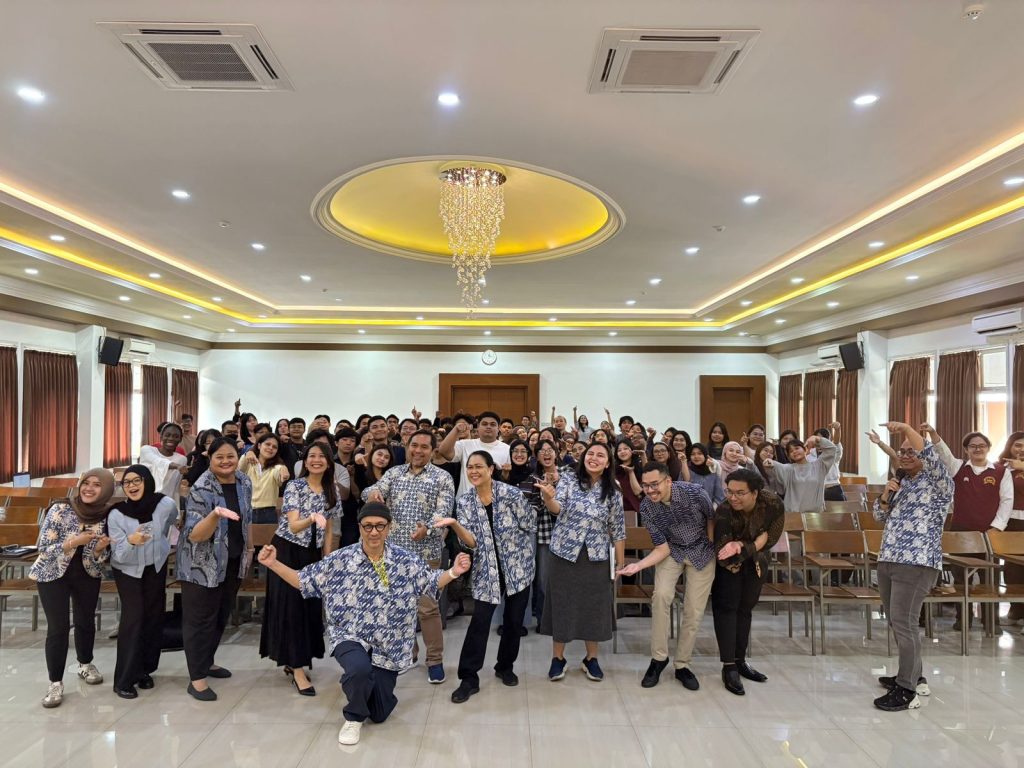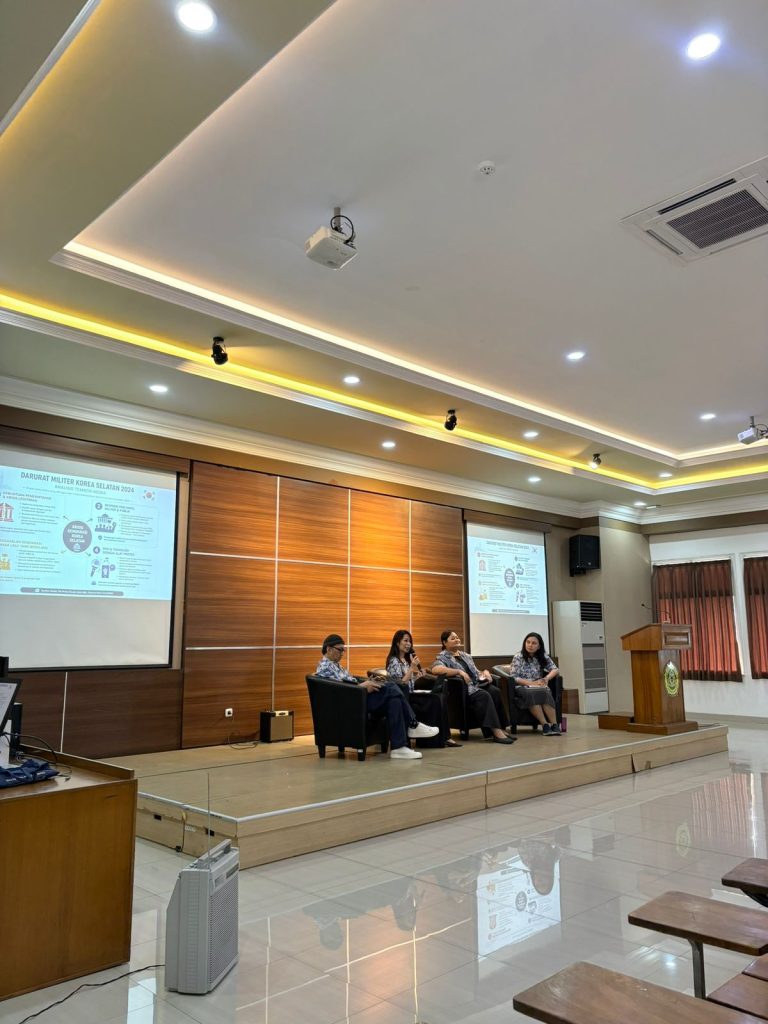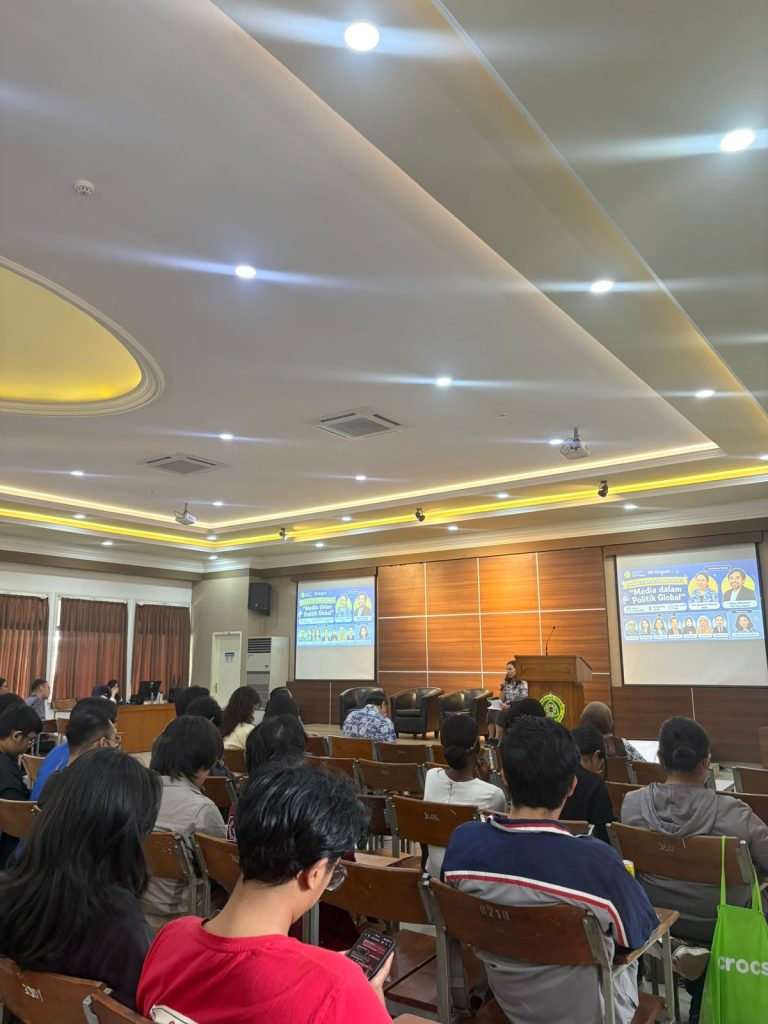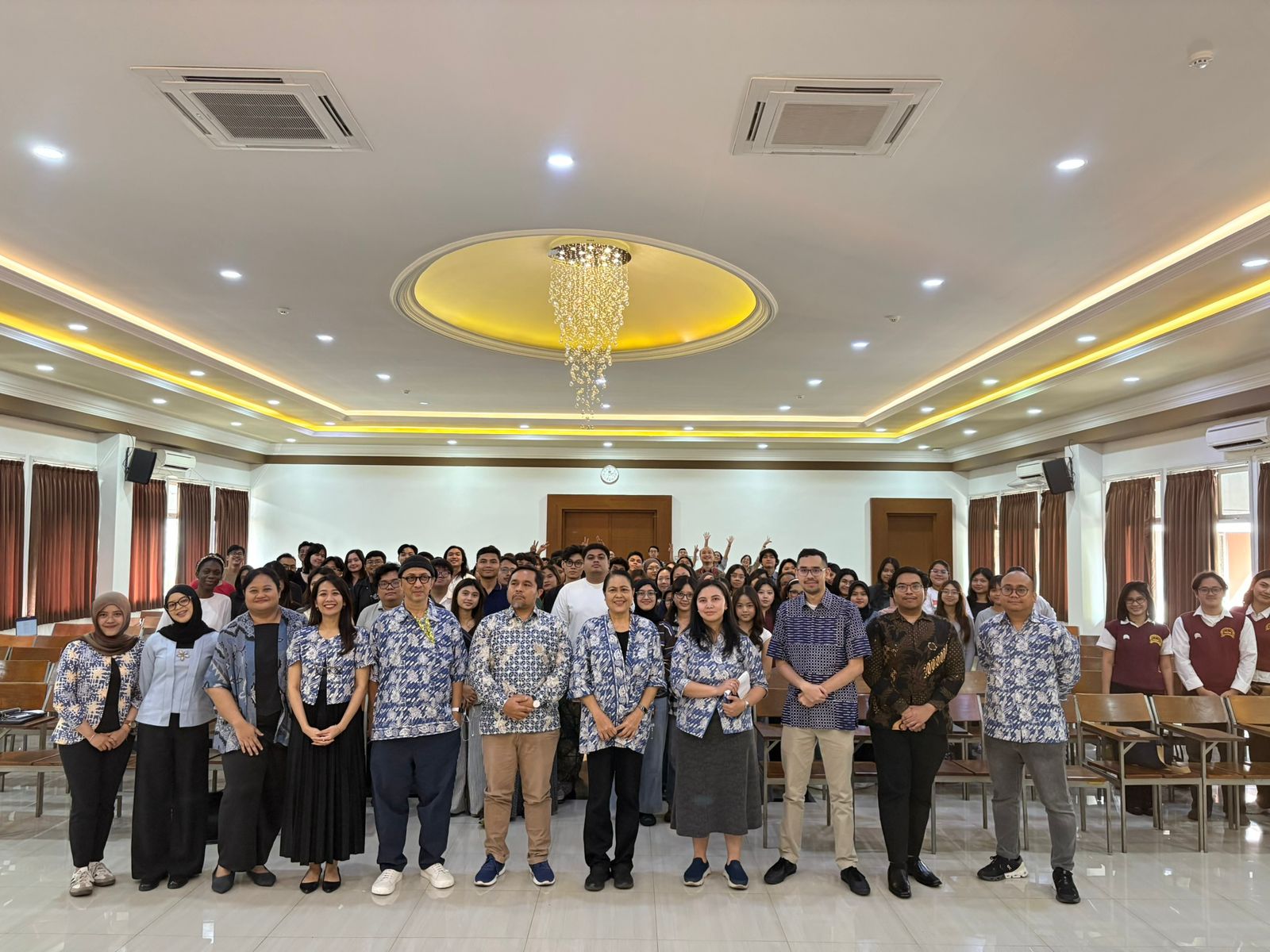
Bandung, 11 June 2026 — The International Relations Study Program of Parahyangan Catholic University, in collaboration with UNPAR Press, organized the Launch and Book Discussion of Media in Global Politics on Thursday, 11 June 2026, at the Veritas Room 3501, UNPAR. Held from 1:00 p.m. to 3:00 p.m. WIB, the event also formed part of the guest lecture series for the Global Communication and Media course, providing students with a valuable opportunity to gain direct insights into the role of media in contemporary global political dynamics.
Media in Global Politics, edited by Prof. Sukawarsini Djelantik, is a collection of scholarly writings that examine the relationships among media, power, public opinion, popular culture, diplomacy, and international conflict. Through this volume, media are understood not merely as channels of information but also as actors capable of shaping perceptions, framing reality, and influencing how the public interprets political events at both national and global levels.
The event featured Prof. Sukawarsini Djelantik as the book’s editor, with Wahyu Dhyatmika, CEO of Tempo Digital, serving as the discussant. The discussion was moderated by Yuliana Maria Mediatrix. The event also involved several contributing authors, including International Relations lecturers from UNPAR and alumni: Sapta Dwikardana, Ratih Indraswari, Meyta Saraswaty Putri, Rifki Khalfani, Electra Ainun, Chiquita Adji, and Muhammad Adli.
As a guest lecture, the event provided students with an opportunity to observe how issues studied in the Global Communication and Media course manifest in real-world contexts. Discussions of media extended beyond theoretical perspectives and were connected to concrete examples, including digital political campaigns, international media framing, popular culture, citizen journalism, the Israel–Palestine conflict, South Korea’s political crisis, and the role of global media outlets such as CNN in shaping international public attention.
In his remarks as discussant, Wahyu Dhyatmika emphasized that the information ecosystem of the twenty-first century has undergone profound transformation. Media no longer function solely as channels of communication between states and the public; they have become arenas of influence contestation. Within digital spaces, political competition takes place not only through speeches, diplomacy, or state policies, but also through algorithms, botnets, information manipulation, coordinated campaigns, and narrative warfare.
Wahyu also highlighted the phenomenon of Foreign Information Manipulation and Interference (FIMI), namely the practice of information manipulation conducted by both state and non-state actors to influence public opinion. In his presentation, he demonstrated how information manipulation operates through a particular pattern: narratives are generated from specific sources, amplified by algorithms, disseminated through coordinated accounts, and eventually enter public discourse, shaping societal perceptions. In other words, disinformation does not always function in an overt or aggressive manner; it often appears as an organic flow of information, despite being driven by carefully designed mechanisms.
However, his presentation did not focus solely on the darker aspects of digital media. Wahyu also emphasized that the true strength of media lies in ethical journalism, verification, transparency, and investigative courage. Algorithmic manipulation thrives when its mechanisms remain hidden, but it can be weakened when its networks are exposed, its patterns are mapped, and its actors are identified. In this context, journalism serves not only as a means of disseminating information but also as a safeguard for maintaining a healthy and democratic public sphere.
The book itself encompasses several major themes. The first section examines the relationship between media, politics, and the domestic economy, including studies on the transformation of Jokowi’s public image, the role of the Antara News Agency in promoting Indonesia’s image through the aerospace industry, and the use of TikTok in the Prabowo-Gibran campaign during the 2024 Indonesian Presidential Election.
The next theme explores media, popular culture, and citizen journalism. Several chapters discuss Netflix’s role in disseminating Korean culture through the series Squid Game, the relationship between citizen journalism and professional journalism in the context of immigration issues in Germany, as well as the representation and cultural impact of Africa in the film Black Panther in the United States and the United Kingdom.
The book also expands its discussion to the realm of media and global politics, including analyses of political narratives in Russian political memes, democracy and social media in South Korea’s political crisis, the role of Twitter/X and Facebook in the 2024 United States Presidential Election, and the influence of the platform X on economic and political life in the United States. Through these diverse studies, readers are encouraged to understand that contemporary global politics is shaped not only through diplomacy, official speeches, or state policies, but also through algorithms, hashtags, memes, visual imagery, and digital narratives circulating within the public sphere.
One of the book’s key concerns is the reporting of international conflicts. Several chapters examine how global media frame the Israel–Palestine conflict, including comparative analyses of coverage by The New York Times and Al Jazeera, as well as an examination of CNN’s reporting following the Hamas attacks in 2023/2024. These studies demonstrate that choices regarding language, news sources, perspectives, and reporting structures can shape how the public understands conflicts, victims, perpetrators, and the legitimacy of particular political actions.
In addition, the book highlights the effects of CNN on global politics. The discussion covers CNN’s role in reporting on joint South Korea–United States military exercises, the Israel–Palestine conflict, and United States foreign policy concerning human rights violations against the Uyghur ethnic group. These studies illustrate how international media can influence public attention, generate political pressure, and even shape the ways in which states formulate responses to global issues.
Through this event, students, academics, and discussion participants were encouraged to engage with media more critically. Amid the rapid flow of digital information, media literacy has become increasingly important. The public must do more than simply consume information; they must also understand how narratives are constructed, which actors benefit from them, which sources are selected, and what interests may operate behind particular forms of reporting.
The launch and discussion of this book also reaffirmed the commitment of the International Relations Program at UNPAR to connecting academic processes with contemporary global issues. Through Media in Global Politics, UNPAR Press and the contributing authors offer a meaningful contribution to the development of international relations, political communication, and media studies.
Ultimately, the launch and discussion of Media in Global Politics, together with the Guest Lecture on Global Communication and Media, demonstrated that understanding contemporary global politics also requires an understanding of how media operate. In the digital era, media do not merely describe the world; they also shape how the world is understood. Furthermore, amid the noise of algorithms, botnets, and information manipulation, ethical and verification-based journalism remains one of the most important safeguards of the democratic public sphere.