


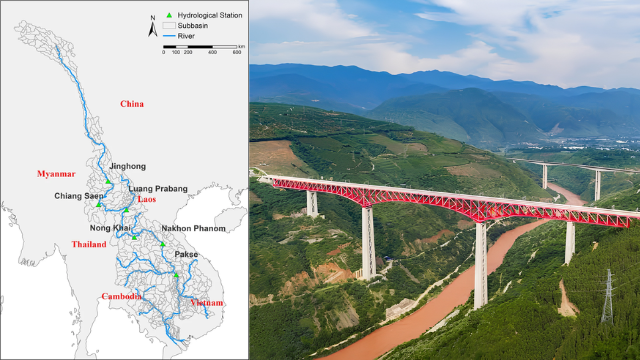
Idil Syawfi, S.IP., M.Si., a lecturer in the International Relations Study Program at Universitas Katolik Parahyangan (UNPAR), together with Cherrie Angel Wijaya, an alumna of the International Relations Study Program at UNPAR, have published a scholarly article in the Journal of ASEAN Studies, Vol. 14 No. 1 (2026), entitled “Lancang-Mekong Cooperation: The Balance-of-Risk Behind China’s Multilateralist Approach in the Greater Mekong Subregion”. The study examines the shift in China’s foreign policy approach in the Greater Mekong Subregion (GMS), from a previously unilateral approach to a multilateral one through the establishment of the Lancang-Mekong Cooperation (LMC) in 2015.
The study further explains that this shift was driven by China’s concerns over the growing influence of other countries, including the United States, Thailand, Japan, and Australia, in the Mekong region. Drawing on Jeffrey Taliaferro’s Balance-of-Risk theory, the authors demonstrate that the establishment of the LMC serves as a strategy for China to avoid the potential loss of influence and maintain its position as a leading power in the management of the Mekong River. Through this cooperation, China also seeks to strengthen its relations with countries in the region while maintaining its influence over the direction and development of regional cooperation agendas.
To read the full article, please visit the following link.